Sunday, July 31, 2011

Living in an Officetel in Korea

In May, my roommate (Jin-yi) and I moved from the university dormitory to an Officetel in downtown Cheonan.

An Officetel (I think it's a combination of "office" and "hotel") is a place where people can work and/or live. Ours is a one-room and includes a kitchen with a fridge/freezer, bathroom, washer/dryer, and storage.

Here's the "kitchen"...


And the hallway, with the fridge/freezer and closets on the left and a bathroom and more closets on the right...


Our Officetel is on the 16th floor with a view of the north part of the city and mountains...


Since the Officetel is downtown, it is easier to shop for food and transportation is really convenient. I also see other foreigners often, which I like. I miss the peaceful quiet of living in the country at the university but I still go there often so I can enjoy it then.

More about living in an Officetel and our surroundings later...

Sunday, June 12, 2011

Korean Cooking: Soybean Paste Stew (Doenjang Jjigae)

I finally made my first Korean dish. My roommate and I recently moved out of the dormitory at the university to a shared room in the downtown area of Cheonan, which means easy access to shopping and we have a kitchen.

In Korean cooking, stews and foods made from fermented foods are common. This dish is called "Doenjan Jjigae" which translates to "Soybean Paste Stew" in English. Sometimes, store-bought Korean soybean paste has a strong smell, but the soybean paste I received from a friend doesn't smell strong at all.

I enjoyed finding the ingredients, making the dish, and eating it with my roommate. It wasn't as difficult to make as I thought and very tasty (I think it's the special Doenjang I used).

Here's the recipe in case you'd like to try:

Ingredients:
• 1 medium size potato
• a zucchini or a squash
• 1 medium size onion
• garlic
• 1 green chili pepper
• 7 dried anchovies
• 1 green onion
• 100-150 grams of tofu
• soy bean paste (doen jang)
• 4 shrimp

1. Prepare a ceramic pot to put all the ingredients in. (Note: I used a regular pot).
2. Peel the potato, cut it into 2 cups worth of cubes, and put them into the pot .
3. Cut zucchini into 2 cups worth of cubes, and put them into the pot.
4. Cut your onion into chunks, and put them into the pot.
5. Slice your green chili pepper, and put it into the pot.
6. Prepare 7 large dried anchovies by removing their heads and intestines, chop them up, and put them  into the pot. (Note: I didn't use anchovies).
7. Chop up 4 shrimp and put them into the pot. (I didn't use shrimp either).
8. Mince 5 cloves of garlic and put it into the pot.
9. Your pot will now be 2/3 full with your ingredients.
10. Submerge everything in water and cook it over high heat.
*tip: Don’t put too much water, just enough to cover everything
11. When it starts boiling, add 4-6 tbs of bean paste, stir the stew, and keep cooking
12. When the stew is sizzling and all ingredients are cooked, cut your tofu into cubes, chop up 1 green onion, and add them to the stew.
13. Occasionally stir the boiling stew with a spoon.
14. Serve it with a bowl of rice and other side dishes.
*tip: to check whether or not the ingredients are cooked, taste the potato.

from http://www.maangchi.com/recipe/tofu-stew-doenjang-chigae

Monday, April 18, 2011

Time for the TOPIK Again...This time it's Spring at Kyung Hee University

Yesterday, I took the Intermediate Level of the TOPIK (Test of Proficiency in Korean). Last November, I passed Level 2 of the Basic Level and this time, my goal was to pass Level 4. (I need to pass Level 5 eventually as a requirement for my Ph.D. degree). In the past month, I realized this goal was probably not realistic. When I was doing the practice tests, I realized that despite all the studying I had done, there was a lot of grammar and vocabulary I still didn't know and although I had been studying it for a while now, still not enough time to learn it.

Taking the test was proof of this. A lot of the questions seemed to include the vocabulary and grammar I didn't know well. I was slowed down by this and rushed to finish the Writing section and didn't get to finish the last five or six questions of the Reading section, so had to guess. I also realized that I had never practiced doing the tests within the required time limit because I had been so focused on trying to learn the unfamiliar vocabulary and grammar in the practice tests. Once I learn the Intermediate-level vocabulary and grammar better, I will need to do this.

My hope is that I at least passed Level 3. If not, at least I will know what level I am at and what I'll need to do to pass Level 4. I've said it before...learning Korean is very good training for me.

In Seoul, the TOPIK is held at Kyung Hee University. The university grounds are beautiful as it is, but it being Springtime, all the trees were in full bloom.


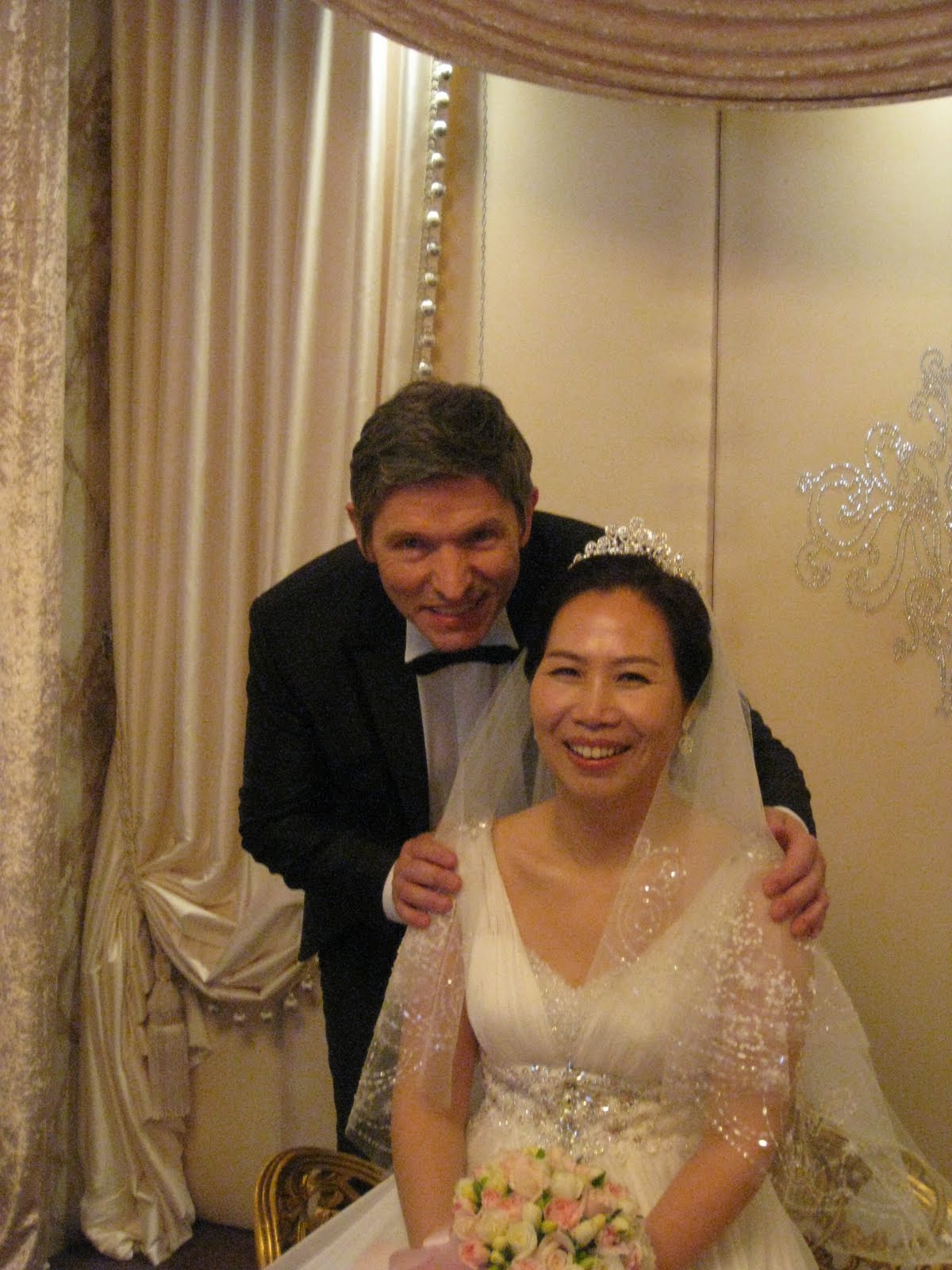
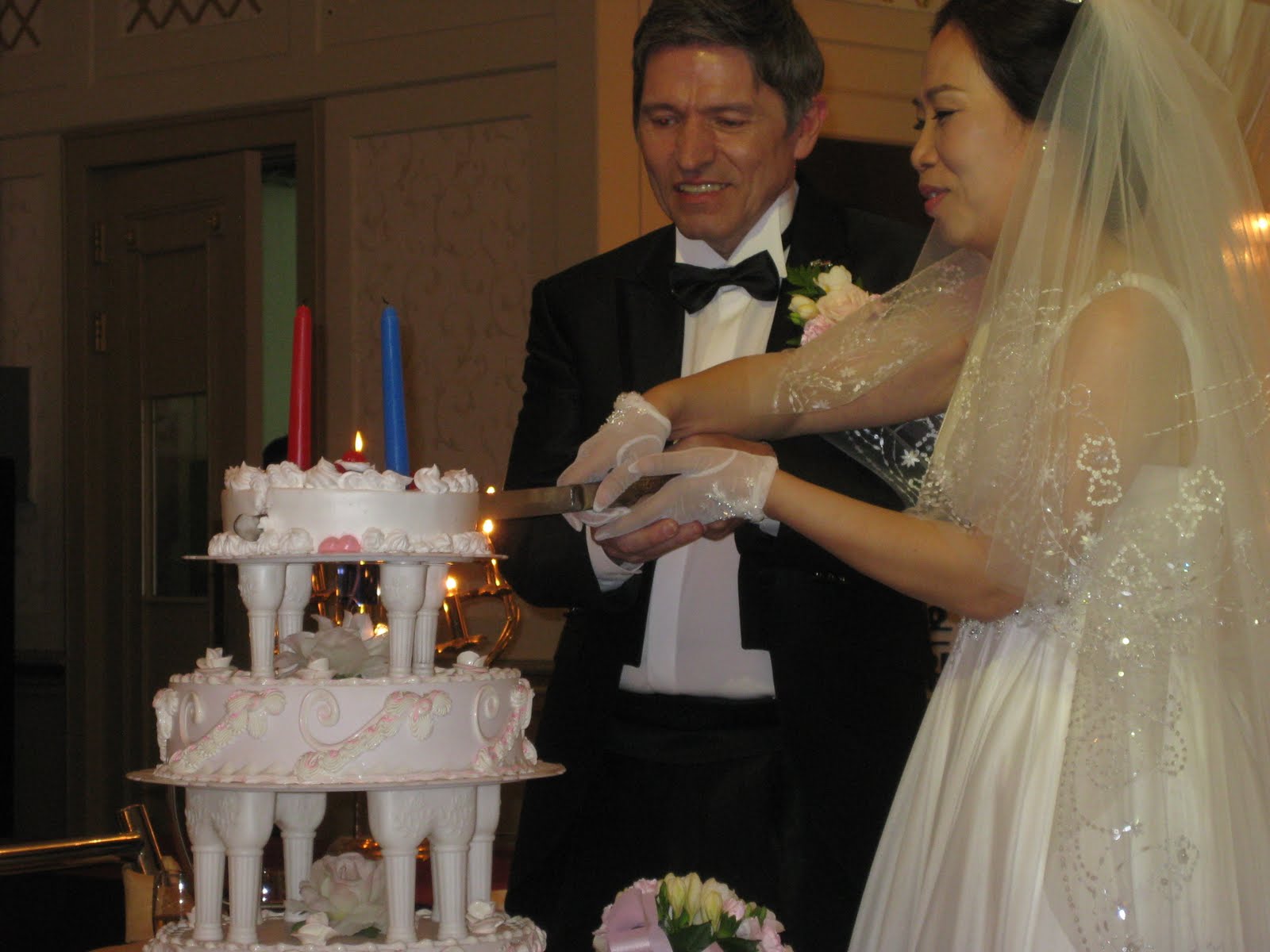
A Korean Wedding

Fraser and Venus are a couple I know from Canada. I was honored to be part of their wedding celebration. As you'll see from the pictures, the ceremony included both traditional elements of a wedding in Korea and those unique to the couple (including English translation which I was excited about). Best wishes to Fraser and Venus, their families, and all those whose lives they will touch.


Saturday, March 5, 2011

UBE Graduation and Opening Ceremony 2011

Some pictures from this year's graduation ceremony:


Tuesday, March 1, 2011

Independence Day in Korea

Today, March 1st, is Independence Day in Korea. It marks the March 1st movement in 1919, when the Korean people declared independence from Japan.

You can read more about the March 1st movement here.

This statue is one of the statues here at the Hanminjok (traditional name for the Korean people) Historical and Cultural Park. It is one of several statues representing those involved in the Independence movement. It also happens to be the only statue of a woman here at the park so I feel a special affinity to her.

Yu Gwan-sun was a student and organizer in the March 1st movement. Having been inspired by the beginnings of the March 1st movement as a high school student in Seoul, she returned to her hometown (in this area) and planned a demonstration for independence. About 2000 people attended. Yu Gwan-sun and others were arrested and her parents were both killed during the demonstration. She was sentenced to six years in prison, where she continued protesting for independence and received harsh beatings and torture.

Yu Gwan-sun died at the age of 18 in prison, reportedly as a result of torture. For many Koreans, she represents the courage and perseverance that, throughout history, helped them to preserve their culture and develop their country despite difficult times. I visited her birthplace, which is located in this area close to the university, last year. And on my daily walks in the park here, her statue is a constant reminder of the courage and strength inside all of us.

You can read more about Yu Gwan-sun here.

Source: en.wikipedia.org/wiki/march_1st_movement; en.wikipedia.org/wiki/yu_gwan-sun

Friday, February 4, 2011

Happy Lunar New Year!

I took this picture as I was coming down from hiking the mountain behind our university. Up on top of the mountain, the air was clear but closer to the ground, there was a lot of fog since there is snow on the ground but the air is getting warmer.

Yesterday marked the first day of the new year according to the lunar calendar. Here at UBE, most staff had gone home to spend the new year with their families. This and Chuseok (like Korean Thanksgiving) are the most important holidays of the year for most Koreans. There are usually a lot of traffic jams as people leave the cities to travel back to their hometowns.

Families gather to eat food typically eaten for Sol Nal (New Year), including Ddeokguk (rice cake soup) and have traditional ceremonial rites for their ancestors. Young people also do three bows to their elders who give blessings (spoken and usually in the form of money).

This year is the "Year of the Rabbit" according to the Chinese zodiac. The rabbit is said to signify peace and prosperity. Wishing you all a happy lunar new year with much peace and prosperity!